Korean Hair Vinegar in India: Does It Fix Hard-Water Hair?
Every few months a K-beauty bottle promises the impossible, and this time it is glass hair from a two-minute shower step. Korean hair vinegar in India is now a real search, because the trend that Vogue covered on 11 November has landed on Indian feeds just as our winter water turns harsh. The good news? This is one trend that makes more sense for an Indian bathroom than for an American one. The less glamorous news: you may not need the imported bottle at all.
Here is what hair vinegar actually does, why hard water is the reason it might work for you, what the Korean versions cost here, and how to make a sensible kitchen version tonight.
What is Korean hair vinegar, really?
Strip away the raspberry scent and pretty packaging and it is an acidic rinse. You shampoo, pour the vinegar over your scalp and lengths, massage for a minute and wash it out with lukewarm water. In Vogue’s report, Korean medicine doctor Ellie Byun described it as doing for shampoo what a toner does for a cleanser: shampoo leaves the hair and scalp slightly lifted and alkaline, and the acidic rinse settles everything back down.
That “settling” is the whole story. The outer layer of each strand, the cuticle, lies flatter at a lower pH. A flatter cuticle reflects more light and tangles less, which is why a good rinse makes hair look shinier the same day. It is a surface effect. It does not repair split ends, and it does not grow hair, whatever the TikTok captions say.
Why hard water makes this trend more useful in India
If your hair feels like straw a day after washing in Delhi and soft again on a trip to Kolkata, you already know the problem. Hard water carries dissolved calcium and magnesium. When it dries on your hair, those minerals stay behind as a dull, rough film that also stops conditioner and oil from doing their job.
A Times Life explainer on Indian water notes that Delhi, Rajasthan, Gujarat and parts of Tamil Nadu regularly show very hard water in municipal reports, while Mumbai and Bengaluru sit in the moderately hard range. It also points to a 2016 study in the International Journal of Trichology, in which hair soaked in hard water lost measurable strength and elasticity compared with hair kept in distilled water.
Mineral scale is alkaline, so an acid dissolves it. This is the same reason you descale a kettle with vinegar or citric acid. Pune dermatologist Dr Ajay Deshpande, speaking to News9, listed vinegar or citric acid rinses and a filtered-water final rinse among the simplest fixes for hard-water hair. So the Korean trend and the Indian dermatologist are, for once, saying the same thing.
What the Korean bottles cost here
This is where the India angle gets awkward. Vogue’s shortlist of Korean hair vinegars is priced at roughly $14 to $25 in the US. In India, most of them are not stocked by the big beauty apps and come through import sellers. When we checked on 15 November, the most famous one, A’Pieu’s Raspberry Hair Vinegar (200 ml), was listed at ₹2,049 on the import store Sourcery. That is a lot for a rinse you use once or twice a week.
If you do buy one, read the label carefully. Several brands also sell a vinegar shampoo, which is a different product. You want the word “rinse” or “hair vinegar” and instructions that say to use it after shampoo. And if you are importing anyway, our guide on where to buy Korean beauty products in India covers the sellers worth trusting.
The kitchen version (and the gentler citric one)
Apple cider vinegar from the grocery aisle does the same basic job. Dermatology guidance from Nebraska Medicine suggests starting weak, about half a tablespoon in a cup of water, and building up only if your scalp is happy. The Times Life piece suggests going up to one part ACV to four parts water at most. Start at the weaker end. You can always add more next week.
- Shampoo as usual and squeeze out the excess water.
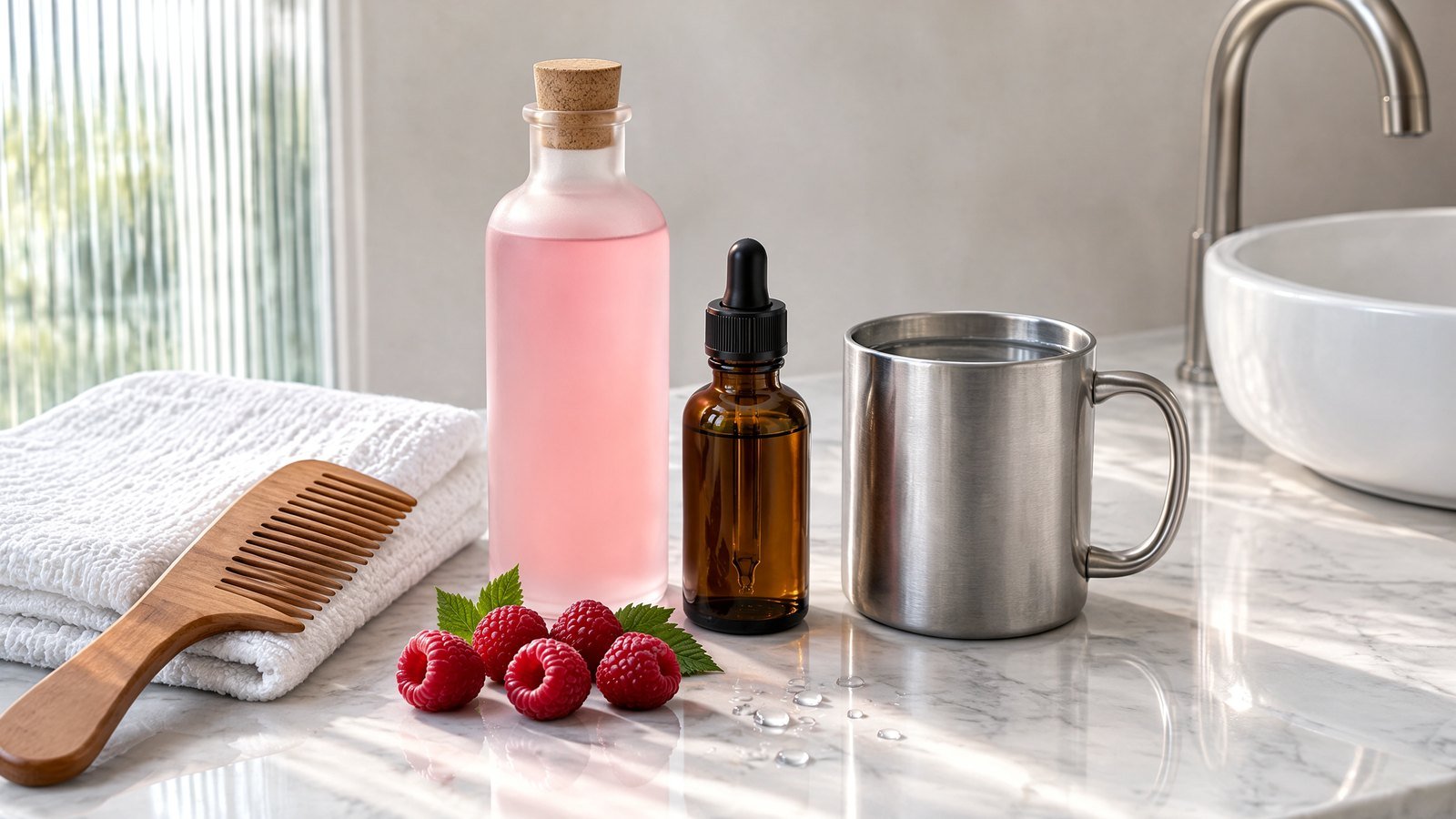
- Mix your diluted ACV in a mug, ideally with RO or stored drinking water rather than tap water.
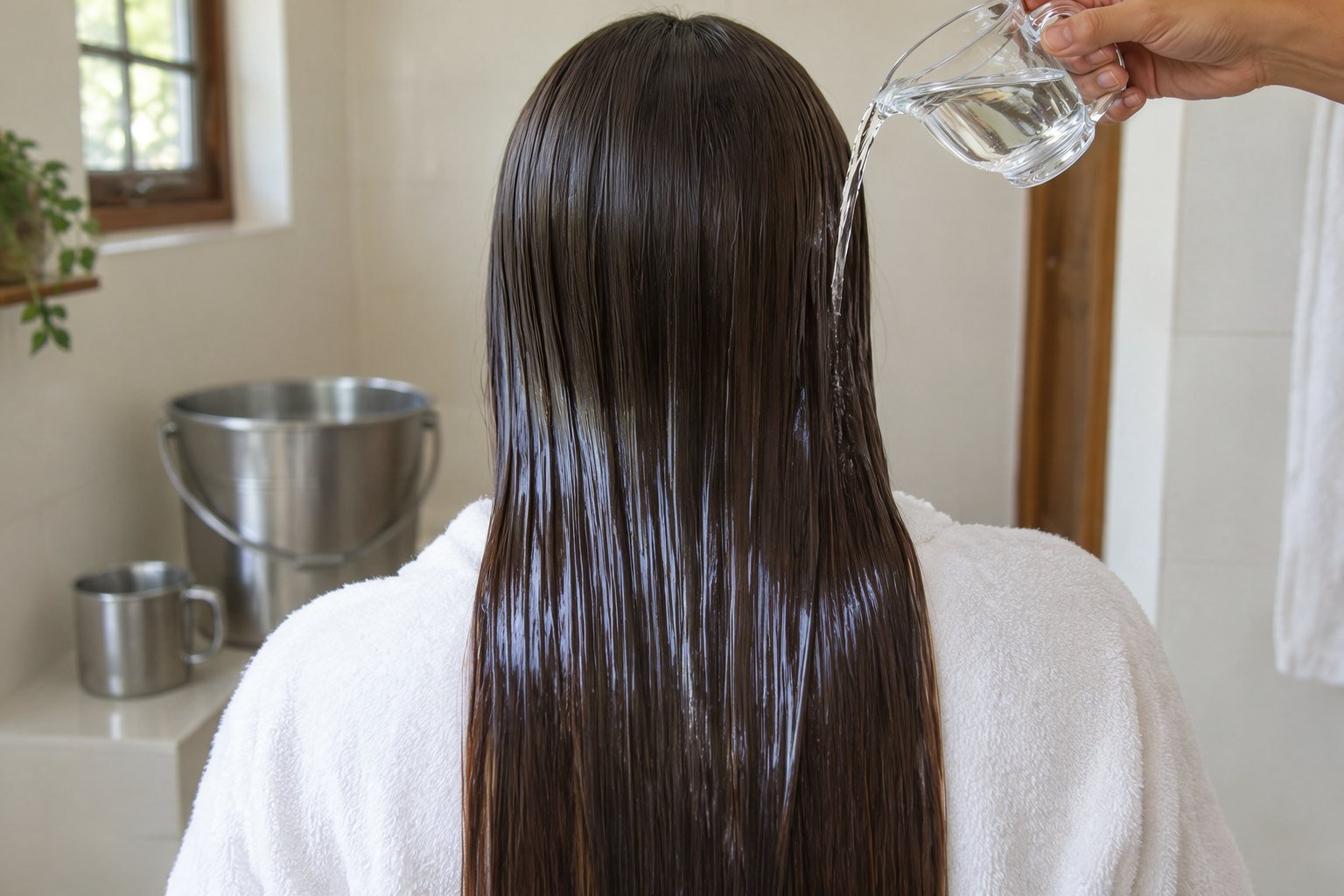
- Pour it slowly over the scalp first, then the lengths. Massage gently for a minute or two.
- Rinse well with lukewarm water, then condition the mid-lengths and ends.
- Do this once a week. Twice is the ceiling, even with very hard water.
Hate the smell? Food-grade citric acid is the odourless alternative: Times Life suggests half a teaspoon dissolved in a litre of water. It is more predictable than lemon juice, which varies from fruit to fruit. And don’t forget the ritha and shikakai your grandmother swore by. They are naturally low-pH cleansers, a gentle way to keep buildup down between rinses, though they will not clear a heavy mineral film once it is there.
Who should skip it
Vinegar is still an acid. Never use it undiluted, and patch test behind the ear before the first full rinse. Skip it entirely if you have psoriasis, eczema, cuts or an already itchy, inflamed scalp; that is a dermatologist visit, not a DIY project. If your hair starts to feel squeaky, dry or brittle, you are overdoing it, so cut back. Coloured hair deserves extra care, because frequent acidic rinses can affect how long colour lasts.
Also, be honest about the cause. If your hair is dull because of heat styling or bleach, a rinse will add a little shine and nothing more. For styling that does not fry your lengths, our bombshell blowout guide for Indian humidity is a better place to start.
Our take
Korean hair vinegar is not a gimmick, but the magic is in the acid, not the passport. If you live with hard water in Delhi, Jaipur or Ahmedabad, a weekly rinse is one of the cheapest upgrades you can make to your hair routine, and a kitchen bottle of ACV or a pinch of citric acid gets you most of the way there. Buy the imported bottle only if you want the fragrance, the nozzle and the ritual, and you are comfortable paying about ₹2,000 for it. Pair any rinse with an RO-water final pour and you will notice the difference before you notice the price.
FAQ
Can I use Korean hair vinegar every day?
Follow the product label, but most people do well with once or twice a week. DIY ACV rinses in particular should not be daily, because too much acid can leave hair dry and the scalp irritated.
Does hair vinegar help with hair fall?
There is no good evidence that it grows hair or stops hair fall. It can reduce breakage from rough, mineral-coated strands that snag when you comb them, which can look like less hair fall. Real shedding needs a doctor to check causes like thyroid, iron levels or stress.
Should I use conditioner after a vinegar rinse?
Yes, for most hair types. Rinse the vinegar out, then condition the mid-lengths and ends. With the mineral film cleared, your conditioner often works better than it did before.