Cake Mixing Ceremony at Home: How to Host One in India
Every November, hotel ballrooms across India fill up with people in paper chef’s hats tipping rum over mountains of raisins. It looks like a party because it is one. But you don’t need a five-star kitchen or a ticket to throw your own. A cake mixing ceremony at home costs a fraction of a hotel brunch, takes one afternoon, and gives you a jar of fruit that turns into the best Christmas cake you’ll make all year. Here’s how to host one, including the version for people who don’t drink.
First, the date: this Sunday is the one
If you want a reason to do it now rather than “sometime before Christmas”, the calendar has one. In the Anglican tradition, the last Sunday before Advent is called Stir-up Sunday. The name comes from the prayer read in church that day, which opens with “Stir up, we beseech thee, O Lord”. British families took it as their cue to stir the Christmas pudding, each person taking a turn and making a wish.
Advent begins on 29 November in 2026, so Stir-up Sunday falls on 22 November. That is roughly five weeks before Christmas, which is exactly the soaking window most bakers like.
The hotels have clearly done the maths too. The Westin Mumbai Garden City is running a Cake Mixing Brunch on 22 November, listed on its booking page at ₹3,700++ without alcohol and ₹4,900++ with. BW Hotelier reported this week that Hilton Mumbai International Airport has already held its annual ceremony, and The Daily Brunch covered Four Seasons Mumbai’s earlier this month. Lovely, all of it. Your living room can do the same job.
What a cake mixing ceremony actually is
Strip away the chandeliers and it’s simple. You chop dried fruit and nuts, add warm spices, pour over a soaking liquid, and everyone takes a turn mixing with their hands or a big spoon. The mixture then rests for weeks so the fruit plumps up and the flavours deepen. Closer to Christmas, it gets folded into a cake batter and baked.
In India, the ritual has grown well beyond Goa, Kerala and the Anglo-Indian homes where plum cake was always a December fixture. The Times of India recently reported on Delhi-NCR bakers and studios planning hands-on cake mixing workshops, with take-home jars and cookie decorating on the side. It has become a social plan, not just a baking step.
How to host a cake mixing ceremony at home
Think of it as a low-effort get-together with a job attached. Six to eight people is the sweet spot. Enough hands to make it fun, few enough that nobody is standing around holding a raisin.
1. Shop for the fruit and nuts
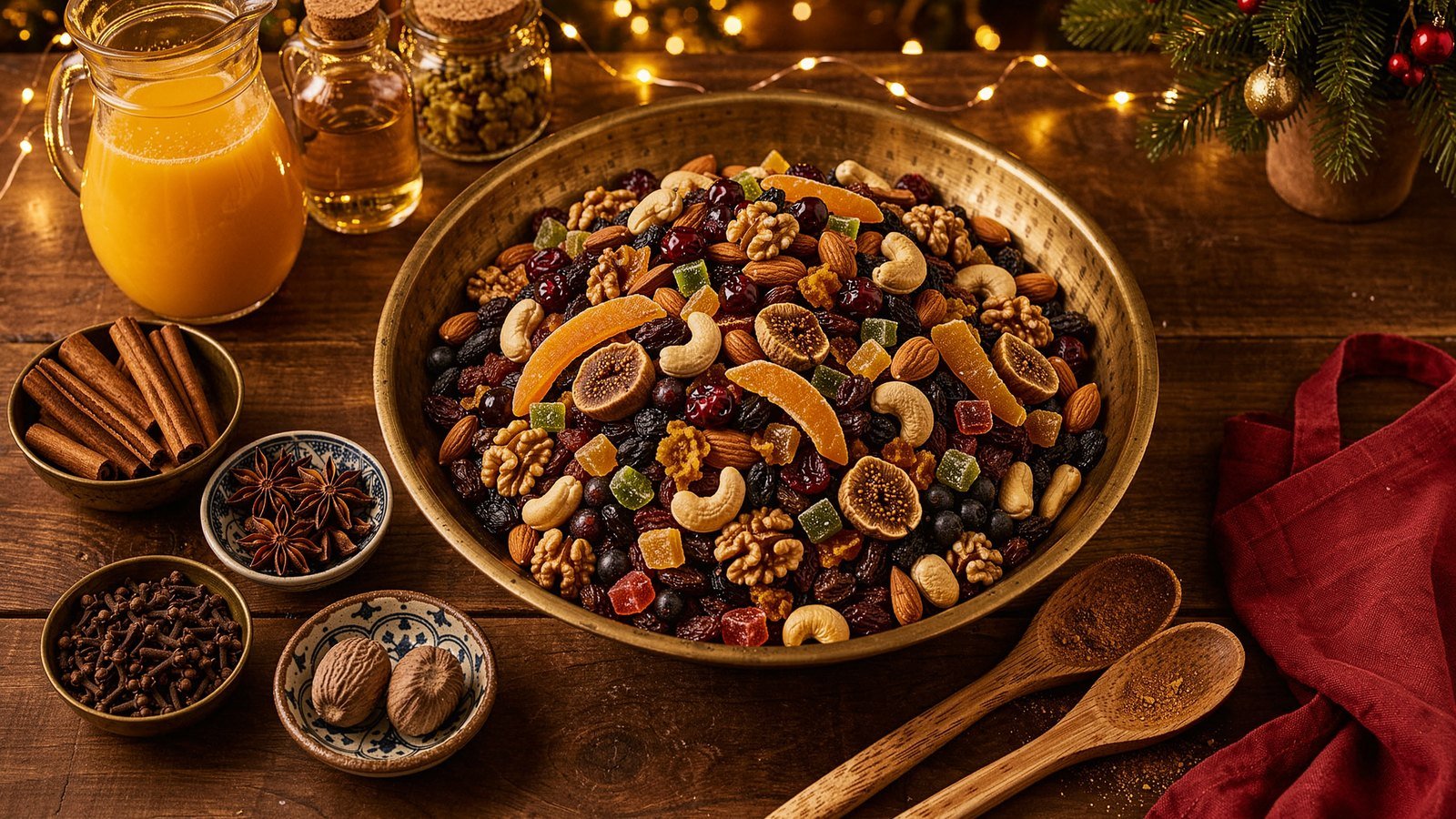
Aim for variety in colour and texture. A good spread:
- Dried fruit: black and golden raisins, black currants, dried cranberries, dates, figs, apricots, glacé cherries
- Candied bits: orange peel, tutti frutti, candied ginger or a spoon of murabba if you have it at home
- Nuts: cashews, almonds, walnuts
- Spices: cinnamon, nutmeg, cloves, a little dry ginger, plus fresh orange and lemon zest
Buy loose if you can. A wholesale market like Delhi’s Khari Baoli or Mumbai’s Crawford Market, or simply your neighbourhood dry fruit shop, lets you buy by weight. Small amounts of many fruits beat ten half-used supermarket packets.
2. Get the ratio roughly right
You don’t need a scale, but you need a sense of balance. The bakers quoted by The Times of India suggested keeping nuts to about 30 per cent and dried fruit to about 70 per cent. Hindustan Times, speaking to its own experts, landed in a similar place and added that spices should stay small, a few per cent of the mix, so they warm the fruit instead of overpowering it.
Our tip: chop everything to roughly raisin size. Big chunks of fig or apricot sink in the batter later and make the cake hard to slice.
3. Set the table like you mean it
This is the bit that makes it a ceremony and not a chore. Lay the ingredients out in separate bowls around one big vessel. A brass paraat looks great and holds a lot. Give everyone an apron, put on a Christmas playlist, and let people add their bowl in turns before the group mixes. Keep chai, coffee or mulled juice going.
4. Choose your soaking liquid
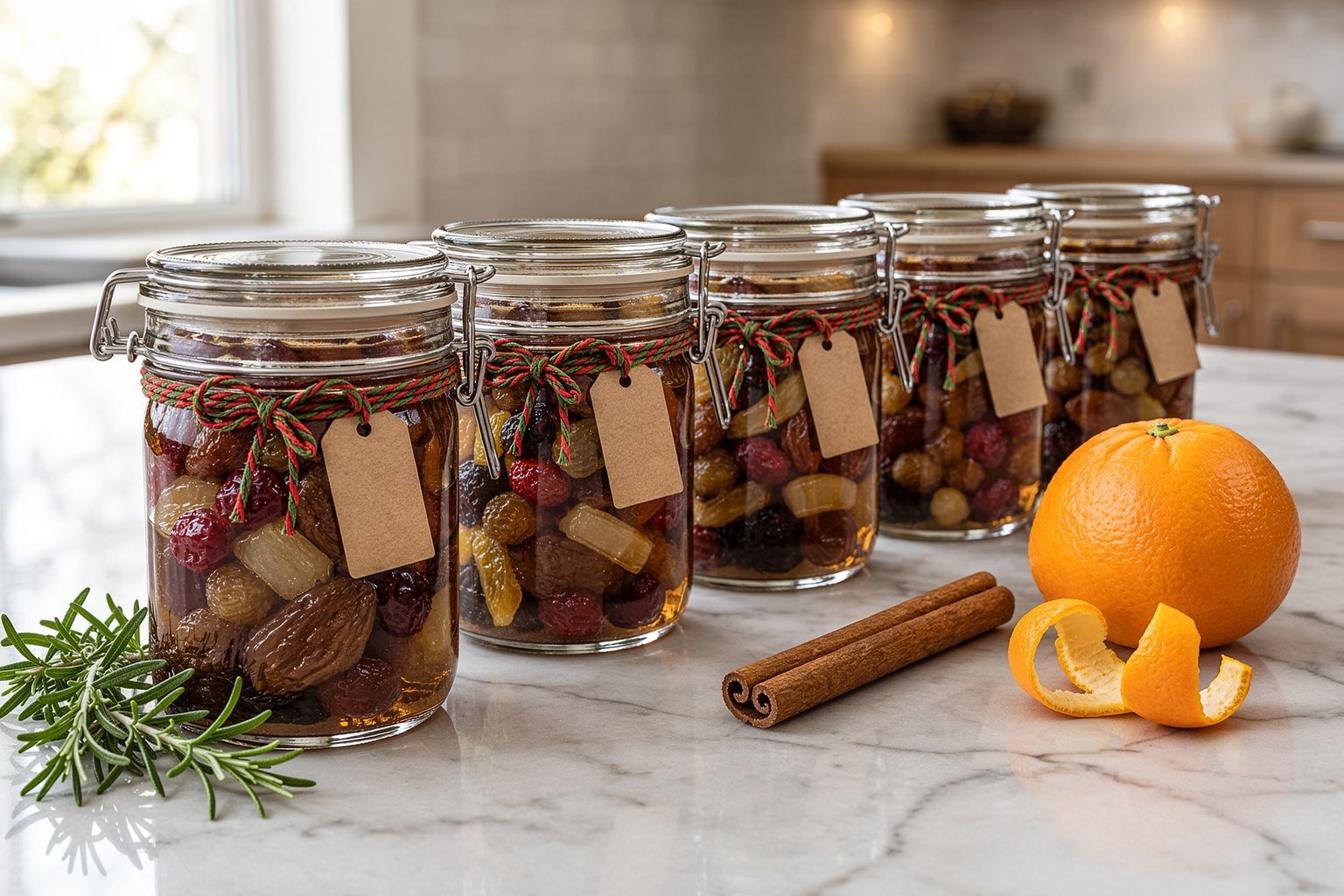
Rum, brandy and whisky are the classics, and they are the reason hotel mixes can sit happily for weeks. Spirits help preserve the fruit at room temperature in a cool, dark cupboard.
Not drinking, or mixing with kids? Use orange juice, apple juice or grape juice. Here’s the catch both Hindustan Times and The Times of India flagged: juice is far more perishable than alcohol. A juice-soaked mix belongs in the fridge, and it won’t keep for five weeks the way a rum mix will.
So we’d split it. On ceremony day, mix the dried fruit, peel and spices dry, pack them into jars and refrigerate. Add juice a few days before you bake. You still get the ritual, and nobody opens a jar of fizzy, fermented fruit on Christmas Eve.
5. Keep the nuts separate
This is the smartest advice in the Times of India piece. Kanika Chopra, founder of the Delhi bakery Kanique, recommended soaking the dried fruit on its own and adding nuts closer to baking, because nuts left in liquid for weeks can go soft or stale. Put the nuts in a separate airtight jar. Your cake will thank you.
6. Jar it and send it home
Sterilised glass jars are the way to go. Glass doesn’t react with the fruit’s acidity or hold on to smells. Wash them, dry them completely, and fill them. A small jar per guest makes a better party favour than another box of sweets, and it fits right into the season of gifting we’re already in. If you’re also sorting your wedding shagun budget this month, here’s how much shagun to give at a wedding.
When to bake, and what to do in between
If you used alcohol, give the jar a gentle stir or shake about once a week. If you used juice, keep it chilled and check it. Any off smell or bubbling means it has started fermenting, and it’s time to bake or bin.
For a Christmas Day cake, many home bakers bake one to two weeks ahead and let the cake rest, wrapped well, so it cuts cleanly and tastes richer. A juice-based cake is best eaten sooner. Bake it closer to the day.
Is a home cake mixing worth it over a hotel brunch?
Our take: yes, if the cake is the point. A hotel ceremony is a nice afternoon out, but you rarely leave with your own mix. At home you control what goes in, you can make it alcohol-free without compromise, and you end up with enough fruit for more than one cake.
If the brunch is the point, book the brunch. No shame there.
The best version might be both: go out for the spectacle, then do a small batch at home with the people you’ll actually eat the cake with. And if you need more December plans, our honest guide to whether beauty advent calendars are worth it is a good place to start.
FAQ
When is the cake mixing ceremony in 2026?
There’s no fixed national date, and hotels hold theirs anytime from early November into December. The traditional pick, Stir-up Sunday, falls on 22 November 2026, which is five weeks before Christmas and ideal for a spirit-soaked mix.
Can you do cake mixing without alcohol?
Yes. Use orange, apple or grape juice instead of rum or brandy. Just remember juice spoils faster, so refrigerate the mix and soak the fruit for days, not weeks. Or mix it dry on the day and add the juice shortly before baking.
How long should fruit soak for a Christmas cake?
With alcohol, anywhere from one week to several weeks; longer gives a deeper flavour. With juice, keep it to a few days in the fridge. Either way, add the nuts closer to baking so they stay crunchy.