How Much Shagun to Give at a Wedding in 2026: A Guest’s Guide
Wedding season is back in full swing, and with it comes the one question nobody likes asking out loud: how much shagun to give at a wedding without looking stingy, or blowing your month’s budget on a cousin’s friend’s sangeet. Your mother has a number in her head. Your office group chat has a different one. And the couple now has a QR code printed next to the welcome board. Here is a calm, honest guide for 2026.
First, a small disclaimer we actually mean. Shagun is not a bill. There is no official rate card, and anyone who quotes you an “exact correct amount” is guessing. What exists is custom, family history and the unspoken maths of who gave what at your own function. The ranges below are our suggestions for an urban Indian guest, built from those customs, not from any survey or rulebook.
How much shagun to give in a wedding: our 2026 cheat sheet
Start with the relationship, then adjust for your own budget. Closeness matters far more than the size of the venue.
- Colleague, neighbour or someone you met twice: ₹501 to ₹1,101. Nobody keeps a record at this level, and a warm card does a lot of the work.
- Friend you see a few times a year: ₹1,101 to ₹2,101.
- Close friend, the kind who knows your Wi-Fi password: ₹2,101 to ₹5,101, or a joint gift with your group.
- Cousin or extended family: usually decided by your parents, often in the ₹5,101 to ₹11,001 band, sometimes with clothes or a small piece of jewellery.
- Siblings and very close family: there is no ceiling here, and it is usually a family call rather than yours alone.
If you are going as a couple, you give one envelope, not two. Bringing the kids? Most families do not expect you to add more, though some guests round up slightly. And if you are attending three functions, you still give once, normally at the reception or the main wedding day.
Why the amount ends in 1
₹501, ₹1,101, ₹2,101. That extra rupee is the most famous detail of shagun, and families explain it in a few ways. The most common reading is that a round number like ₹1,000 ends, while ₹1,001 keeps going, so it stands for a beginning rather than a full stop. Another is that an odd amount cannot be split evenly, which suits a gift meant for two people who are now one household. Whichever version your nani told you, the custom is widely followed across North India and well beyond it.
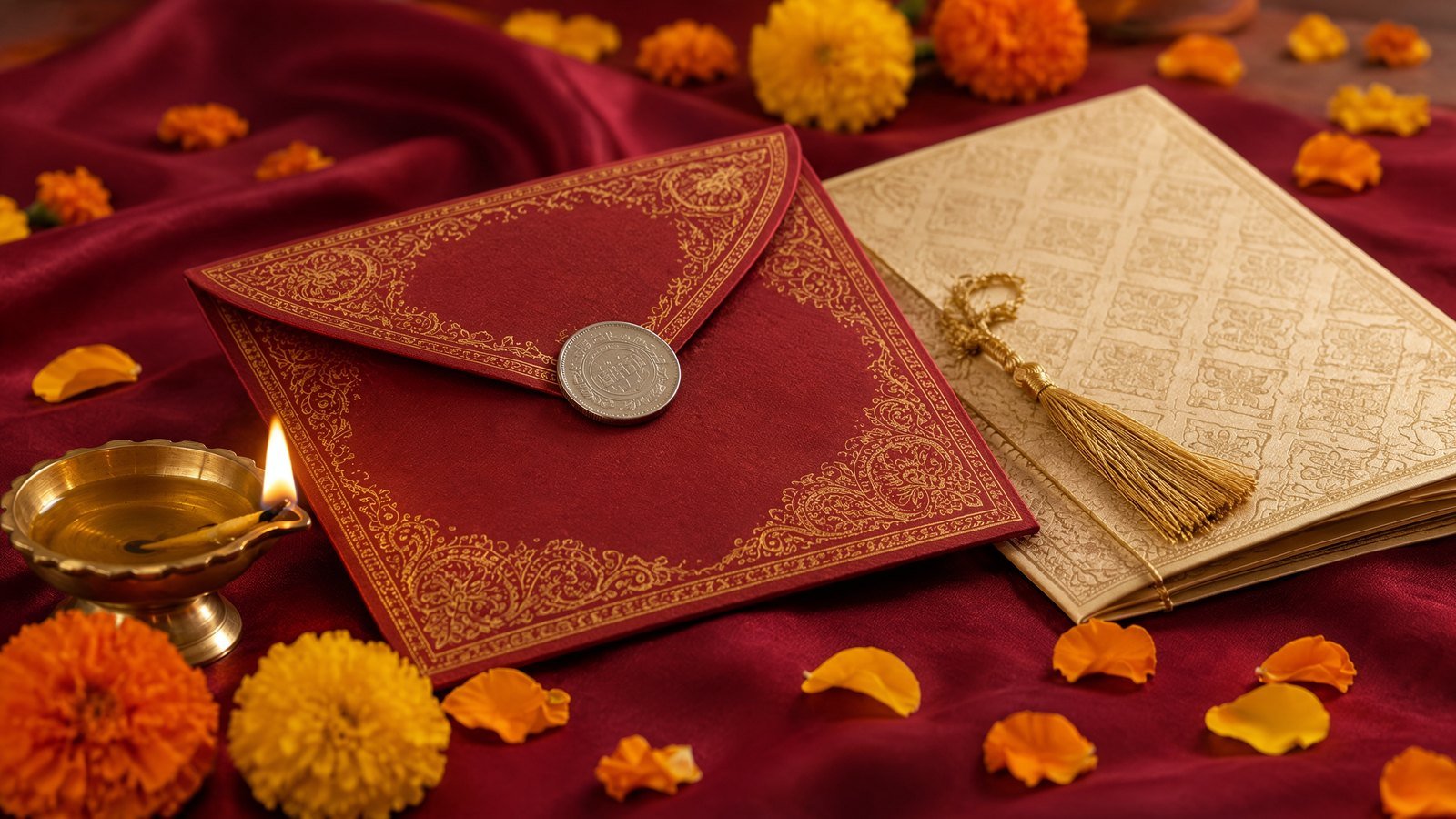
Practical tip: many stationery shops and wedding envelope makers sell shagun envelopes with a coin already stuck to the front, which saves you a frantic hunt for a one-rupee coin in the car park. If you are giving digitally, simply add the ₹1 to the transfer amount.
Cash envelope or UPI: which is more polite now?
This is the genuinely new part of the etiquette, and it is where most guides go quiet. Plenty of couples now display a payment QR code, and older relatives have quietly made peace with it. So, is it rude to send shagun on UPI?
Our answer: not if the couple has invited it. A visible QR at the venue or a payment link shared by the family is a clear yes. If there is no sign of it, carry an envelope. Cash still feels more personal to many families, especially elders who like to bless the couple while handing it over.
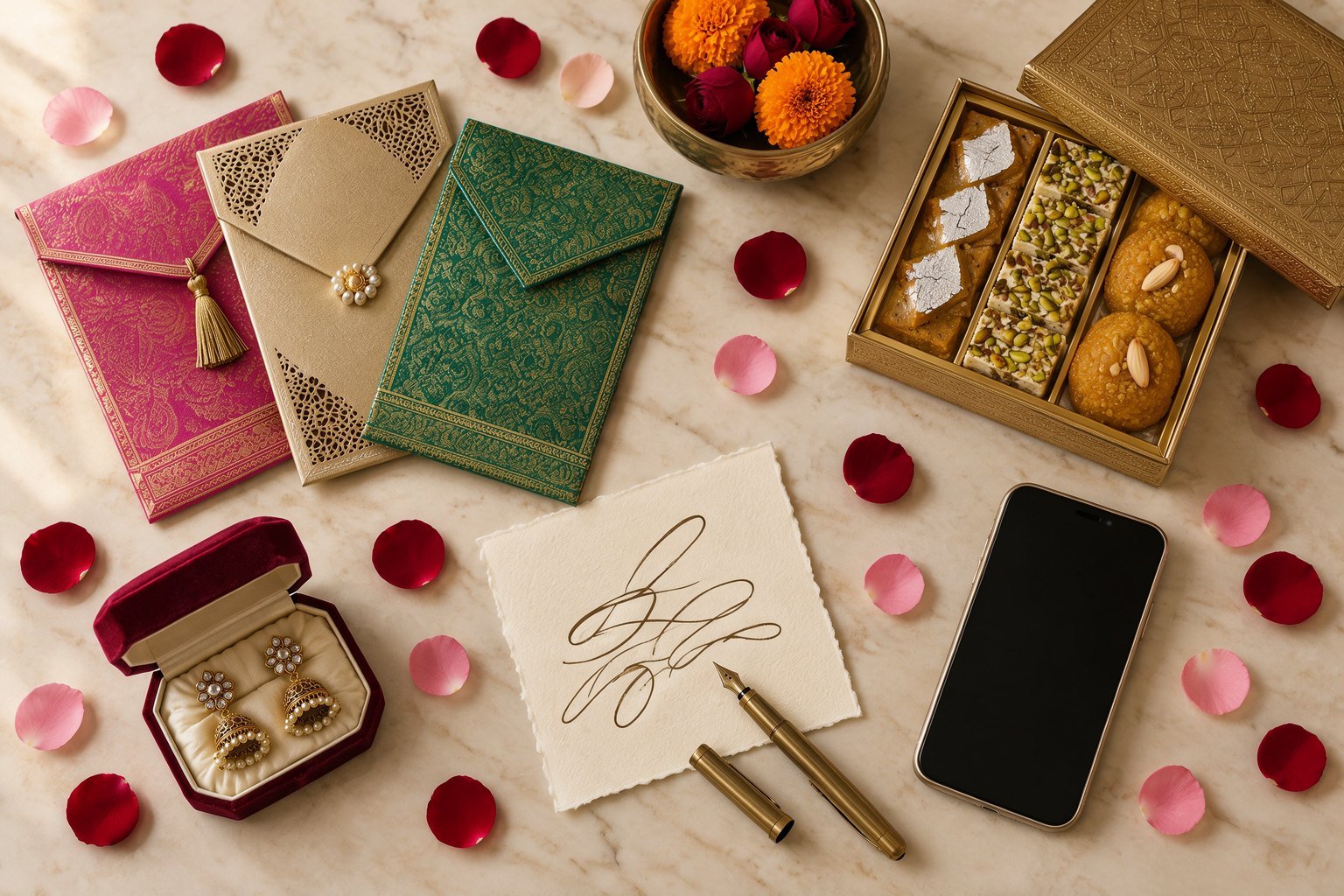
If you do pay digitally, a few manners keep it from feeling like splitting a dinner bill:
- Add a note in the payment message with your name and a line of blessing, so the couple knows who sent it when they sort through hundreds of transfers later.
- Double-check the name that appears before you hit pay. Scanning the wrong code at a crowded venue happens more than people admit.
- Still walk up and congratulate them in person. A transfer is not a substitute for showing your face on stage.
When you can give less, and when you should give more
Context changes the number. A destination wedding where you are paying for flights and a hotel is a gift in itself, and most couples understand that a smaller envelope follows. The same goes for students and anyone early in their career: a heartfelt card with ₹501 is far better than skipping the wedding because you felt you could not afford the “right” amount.
Go higher when the couple came to your own wedding and gave generously, because in many families shagun is quietly reciprocal and someone does remember. Go higher, too, if you are very close to the couple and know they are paying for the wedding themselves. Want to spend more on looking the part instead? Our guides to styling a brocade jacket for a wedding and wearing gold to an Indian wedding have you covered.
What to write on a shagun envelope
Always write your name. Families open envelopes after the event, often late at night, and an unnamed envelope is a small mystery nobody can thank. Beyond that, keep it short and warm:
- “Wishing you a lifetime of love and laughter. With blessings, Riya and Kabir”
- “Shubh vivah! Here’s to many happy years together.”
- “To new beginnings. So happy for you both.”
Skip jokes about the in-laws. They will be the ones reading it.
Our take
Pick an amount you can give without resentment, make it end in 1, and put your name on it. That is genuinely the whole rule. The couple will remember who danced at the sangeet and who sat with their grandmother far longer than they remember whether your envelope said ₹2,101 or ₹5,101. If UPI is welcome, use it gracefully. If it is not, keep a couple of coin envelopes in your bag for the whole season and you will never be caught short.
FAQ
How much shagun should I give to a colleague’s wedding?
For most colleagues, ₹501 to ₹1,101 is perfectly respectable. If the whole team is attending, a pooled gift from everyone often works better than many small envelopes.
Is it okay to give shagun through UPI?
Yes, if the couple or their family has shared a QR code or payment details. Add your name and a short blessing in the payment note, and still greet them in person. If no QR is displayed, an envelope is the safer choice.
Do I give separate shagun for each function?
Usually not. One envelope per family or couple, given on the main wedding day or at the reception, is the common practice. Some close relatives give small amounts at rituals such as haldi or mehendi, but guests are not expected to.