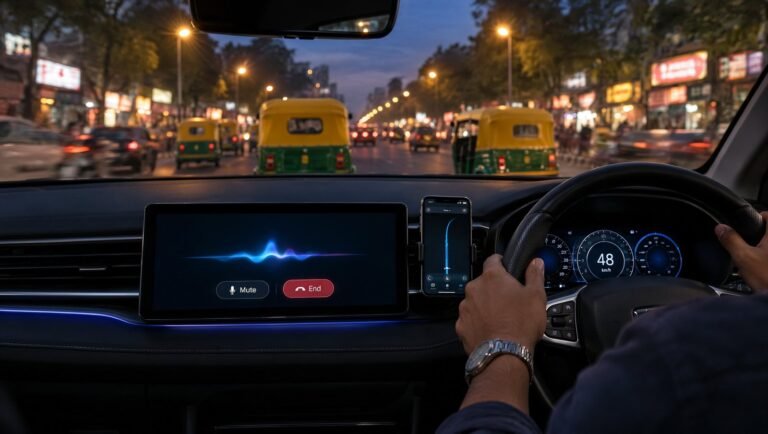
Cashfree Wallet: Can an AI Agent Pay Your Bills Safely?
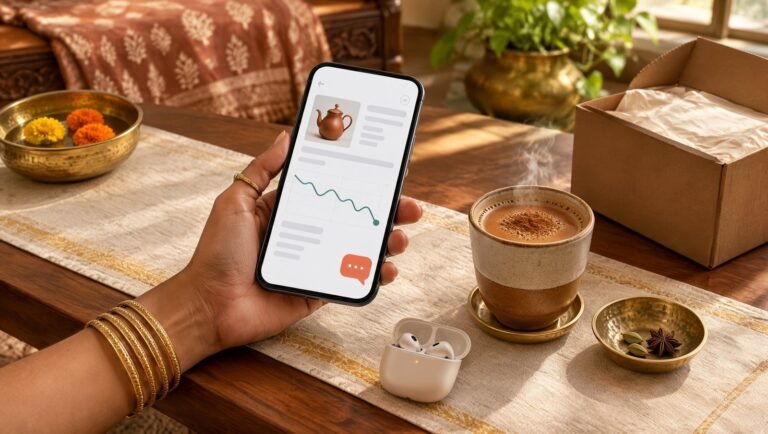
Paying the electricity bill is the dullest errand in an Indian household, which is probably why it is the first one being handed to software. Cashfree Wallet, launched on 24 November by the payments company Cashfree, lets an AI agent you already chat with settle your bills from a prepaid balance you control. The agent never sees your card, your UPI ID or your bank details. That is the pitch. Here is what it actually does, what it can’t do yet, and how careful you should be before you let a chatbot near your money.
What Cashfree Wallet is, in plain words
Think of it as a separate pocket. You put money into it, and your AI agent can spend only what sits in that pocket, only on the jobs you have approved. According to Business Standard, which broke the details, Cashfree holds a prepaid payment instrument (PPI) licence from the Reserve Bank of India, the same kind of licence behind the wallets many of us already use for recharges.
You top it up by UPI, card or net banking, or automatically through UPI Autopay. For now the agent can only pay bills. Cashfree’s own page lists electricity, broadband, gas, FASTag and postpaid mobile, and marks travel, food, groceries and shopping as coming soon.
Its developer documentation goes further. Payments run over the Bharat Bill Payment System (BBPS), the network that already connects most Indian billers, and the supported categories include water, LPG, DTH, insurance, school and college fees and municipal taxes. Two notable gaps: the wallet cannot pay credit card bills or loan EMIs. The agent can fetch those bills and show you the amount, but you pay them yourself.
How Cashfree Wallet works, step by step
Cashfree describes setup in three moves, and it really is that short:
- Link and top up. You connect the wallet to your agent with an OTP sent to your mobile number, then add money.
- Set the rules. For each task you approve a budget: how much, how many payments, and for how long the permission lasts.
- Hand it off. The agent pays inside those rules, you get an alert for every payment, and you can revoke access whenever you like.
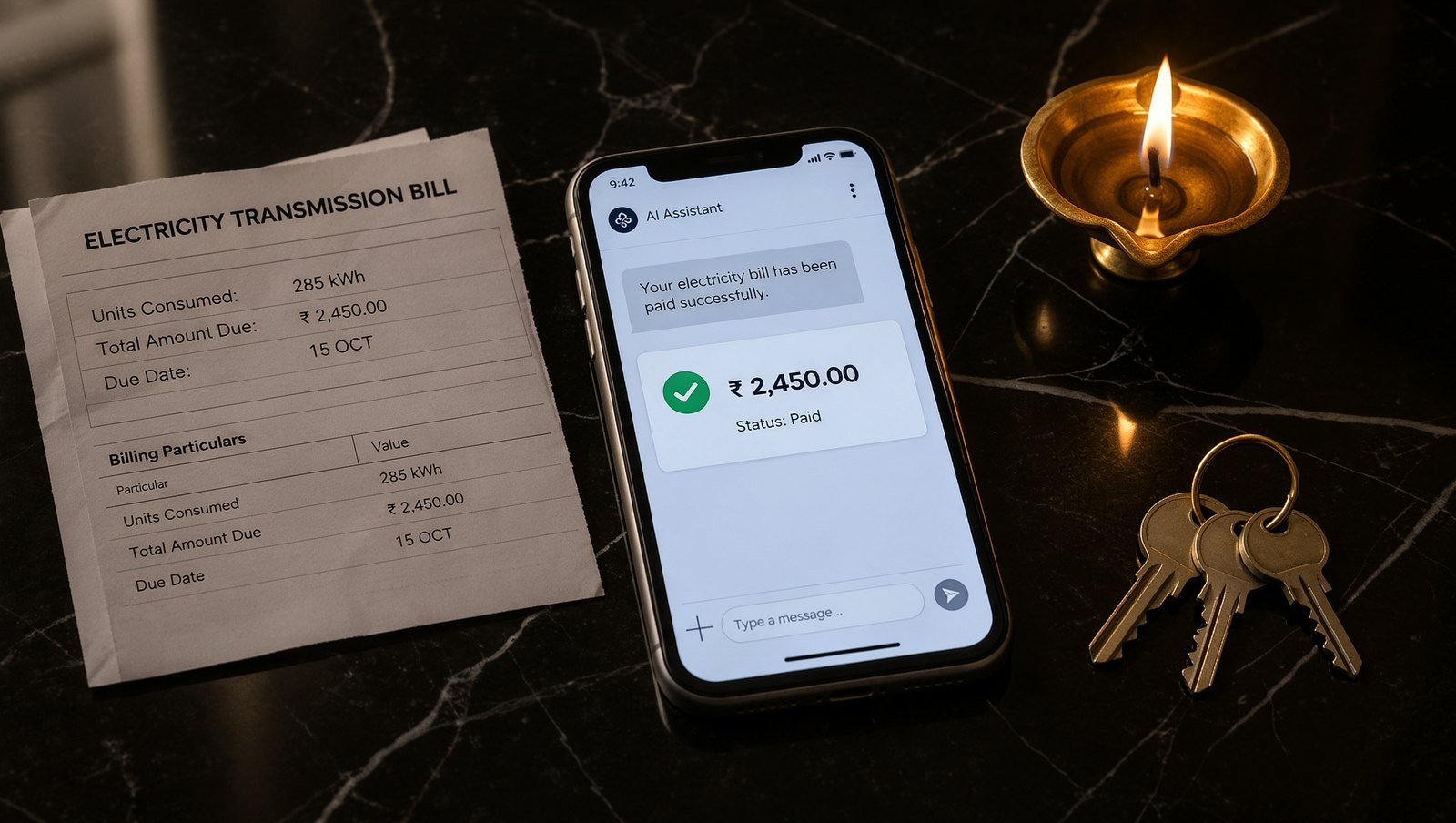
The developer docs include a sample chat that makes this concrete. You ask the agent to pay your electricity bill. It asks for your consumer number and mobile number, fetches the bill, and shows you the name, amount and due date. The first time, it sends a consent link where you log in with an OTP and approve. After that there is no link: the agent shows the next bill, you say yes, and it comes back with a transaction reference as your receipt.
Which agents can use it? Cashfree says any personal agent that has integrated the wallet, and Business Standard reports that more than 100 agents and bot builders had signed up at launch. Developers plug in once through Cashfree’s Model Context Protocol (MCP) server, and the docs name tools such as Claude and Cursor as compatible clients. That is a developer detail, though, not a promise that your favourite chatbot app supports it today. Cashfree hasn’t published a consumer list, so check with the assistant you actually use.
Is Cashfree Wallet safe?
The design gets the most important thing right: the money is fenced off. If an agent misbehaves, the damage stops at the balance in that pocket and the limits you set, not at your salary account. Cashfree also enforces those limits at the payment layer. In a guide on its blog, the company makes the point that telling an AI “don’t overspend” in a prompt is not a real spending control, and that checks have to happen before a payment goes through. That is the correct instinct, and it is more than many agent demos bother with.
Its FAQ adds that payment data is stored with Cashfree on servers in India, and that the agent gets none of your card, UPI or bank credentials.
Still, safe by design is not the same as risk-free. Three things worth keeping in mind:
- Wrong details, right budget. If you give the agent a mistyped consumer number, it may pay a stranger’s bill perfectly within your rules. Limits stop overspending, not mistakes.
- Disputes are untested. Cashfree’s own blog says responsibility for a wrongful agent payment depends on the law, payment rules, contracts and the circumstances. Consent records help an investigation, but they don’t settle who pays you back.
- Copycat links. A flow built on “open this link and enter your OTP” is exactly what scammers love to imitate. Approve only links your agent generates in a chat you started, and check the address before typing anything.
How to get Cashfree Wallet in India
Cashfree Wallet is in invite-only beta. You request an invite through a short form on Cashfree’s website, and the company says it will email you when your batch opens. Its page lists no fee for users, and Cashfree hasn’t announced one, so read the terms when your invite arrives rather than assuming it stays free.
If you do get in, a sensible first month looks like this:
- Top up roughly one month of bills, not more.
- Approve one biller at a time, with a short validity and a small number of payments.
- Check the consumer number against a paper or PDF bill the first time.
- Keep payment alerts on, and revoke any agent you stop using.
Why this matters beyond one wallet
Cashfree isn’t alone in chasing this. Earlier this month it launched Checkout for Agents, which lets AI agents move through its checkout pages with the customer approving the final step. Business Standard also reports that NPCI is building a standard for agentic payments on UPI, called the Unified Agentic Protocol. Cashfree co-founder Reeju Datta told the paper that “India is quickly becoming one of the largest markets for AI agents”.
Shopping agents are already knocking on the door. We recently looked at what Meta’s Muse agent wants to read on your phone, and at how far Alexa can go with shopping in India. Payments are the step where convenience and risk meet, which is why the plumbing matters more than the chatbot.
Our take
The clever part of Cashfree Wallet is the boring part: a ring-fenced balance with hard limits. For most households, though, the everyday gain is small. Bank autopay, UPI Autopay and biller apps already pay the electricity bill on time without an AI in the loop. The wallet makes real sense if you already run your errands through an agent, or if you manage bills for parents in another city and want one place to watch every payment.
Request an invite if you’re curious, keep the balance small, and stick to bills you can easily check. When food, travel and shopping arrive, judge them on one question: do they keep the same tight limits? If they do, this could be how agents earn our trust. If they loosen up, keep paying those yourself.
FAQ
Is Cashfree Wallet free to use?
Cashfree’s page doesn’t list any user fee, and the company hasn’t announced pricing. It is in invite-only beta, so check the terms you receive with your invite.
Can I use Cashfree Wallet with ChatGPT or Gemini?
Cashfree hasn’t named consumer chatbot apps. It says the wallet works with personal agents that have integrated it, and more than 100 had done so at launch. Ask your assistant’s maker whether it supports Cashfree Wallet.
Can the AI agent pay my credit card bill or loan EMI?
No. Cashfree’s developer documentation says the wallet can fetch and show those bills but can’t pay them. You’ll need another payment method for credit cards and loans.