Crochet Kit for Beginners in India: What to Buy, What to Skip
Somewhere between the third reel of someone crocheting a sunflower bouquet and the fifth of a guy finishing a patchwork cardigan, you probably typed it: crochet kit for beginners in India. Then you landed on a wall of product listings, each promising everything you’d ever need in 40, 59 or 72 pieces. Here’s the short version. A good first kit is small, cheap and boring, and most of those giant boxes are selling you tools you won’t touch for a year.
Why everyone suddenly wants to crochet
The hobby has been creeping back for a while, but this winter it feels mainstream. ELLE India’s 18 November piece on the analogue hobby boom put crochet next to pottery and scrapbooking as the things people now do to stay off their phones. The Times of India has reported on weekly crochet clubs in Chennai, where students carry yarn to cafés and hostel rooms swap patterns for birthday gifts. The New Indian Express ran a similar story from Kochi in October about young people getting hooked.
It also isn’t a women-only thing, whatever the old stereotype says. Harry Styles’ patchwork JW Anderson cardigan is still the go-to example. British GQ and Vogue India both wrote about the wave of fans who recreated it at home, and plenty of them were men picking up yarn for the first time. If you’re in the market for a calmer evening habit, this sits nicely beside the swaps we suggested in our guide to brain stacking ideas for India.
What a crochet kit for beginners in India should actually contain
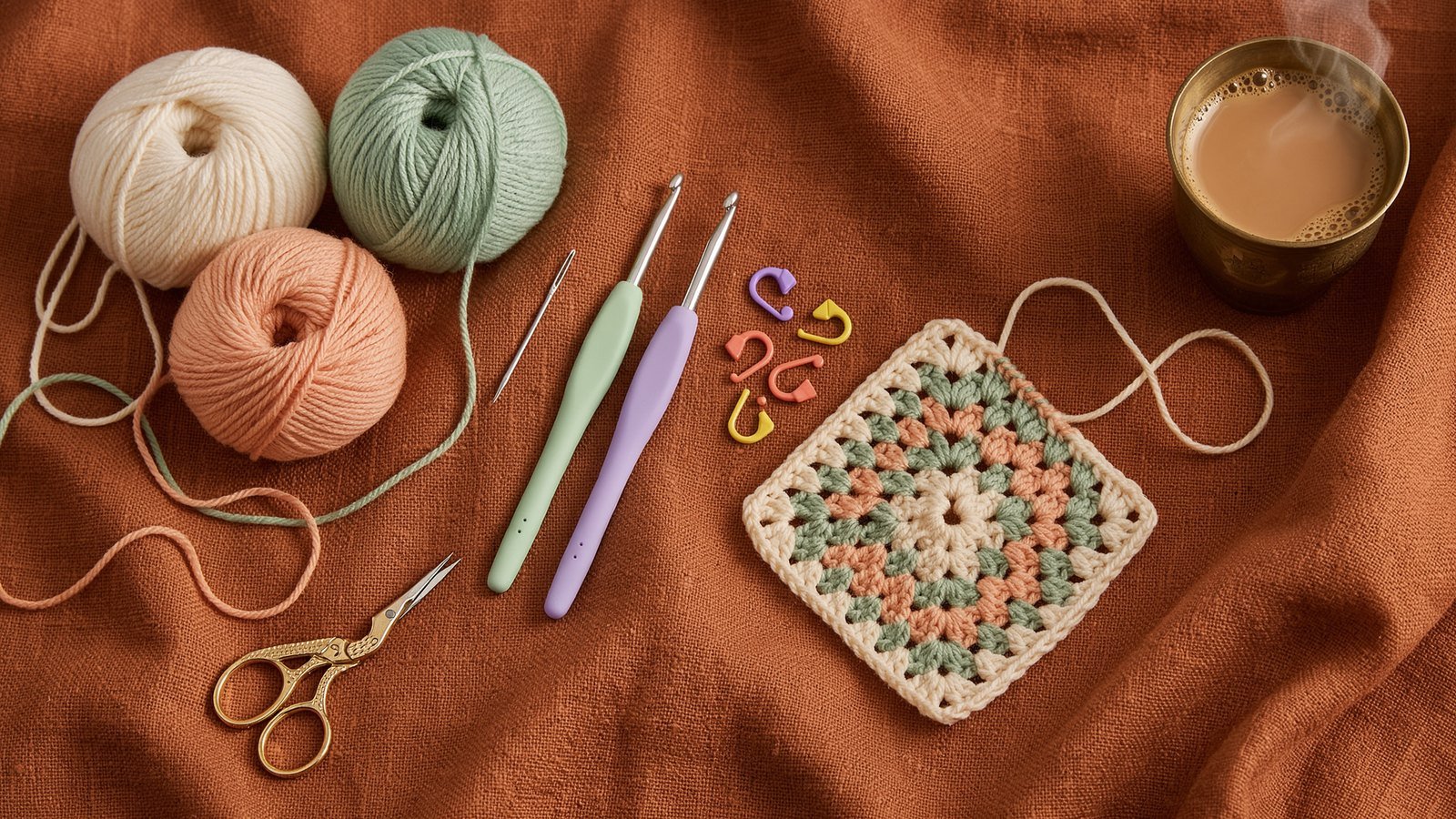
Strip the packaging away and you need four things to learn. Everything else is a nice-to-have.
- One or two regular hooks around 4 to 5.5 mm. Big enough to see your stitches, small enough to feel normal in the hand. An ergonomic handle with a rubber or silicone grip helps if your wrist complains.
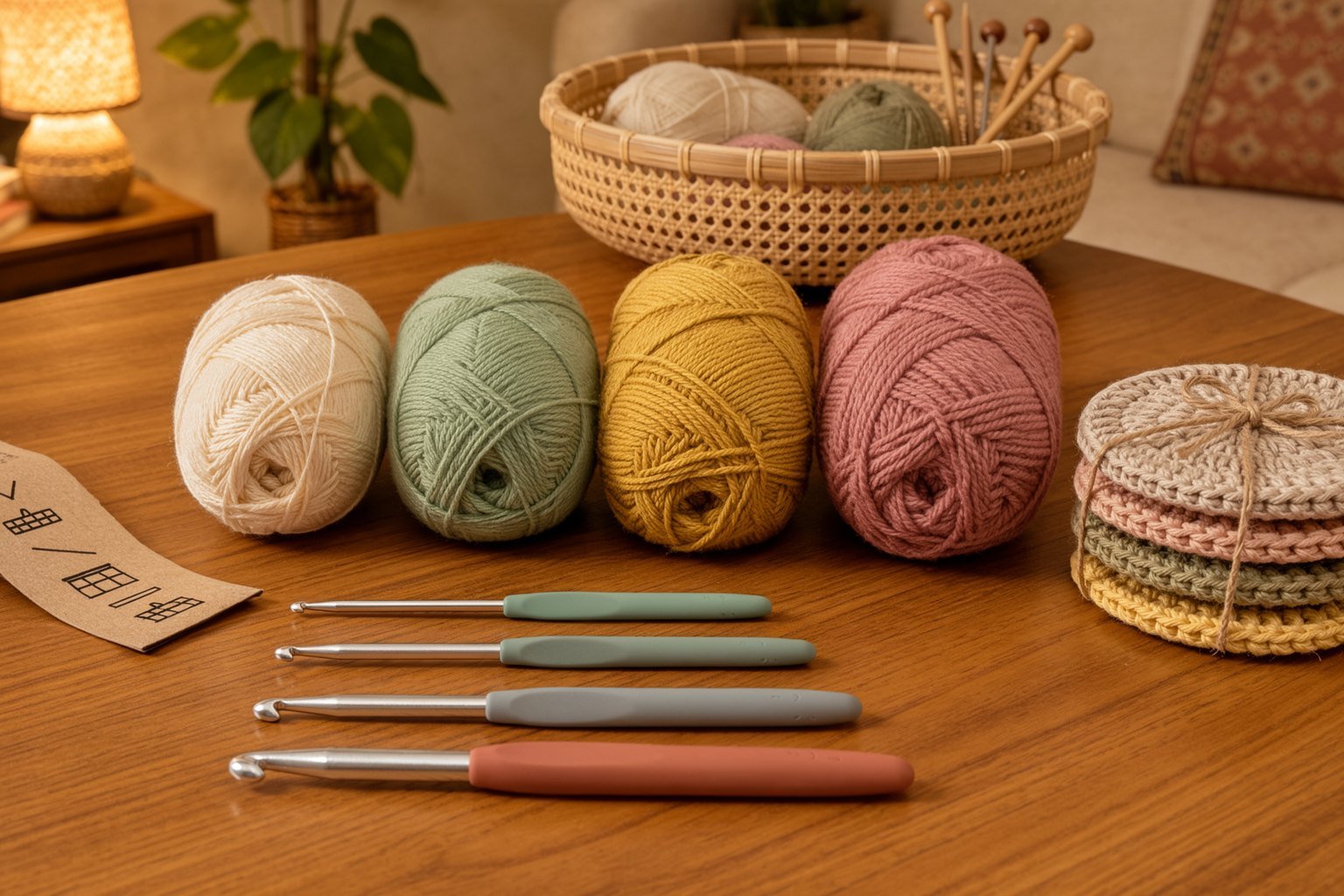
- Two or three balls of smooth, light-coloured yarn. Cream, mint, peach, sky blue. You need to see every loop while you learn.
- A blunt tapestry needle for weaving in ends, plus a few stitch markers (a safety pin or a bit of contrast thread works in a pinch).
- Small scissors and a simple first pattern, ideally with a video. Coasters, a dishcloth or a granny square are perfect.
That’s it. If a kit has those, it’s a real starter kit. If it doesn’t, no number of extras will fix it.
Matching hook to yarn without a headache
This is where most beginners stall, so here’s the cheat sheet. The Craft Yarn Council in the US publishes the yarn weight system most labels follow. By its chart, DK or light worsted yarn pairs with roughly a 4.5 to 5.5 mm hook, and worsted or aran yarn with about 5.5 to 6.5 mm. Sport-weight yarn goes smaller, around 3.5 to 4.5 mm. Treat these as guidelines; your yarn label usually prints the recommended hook size, and that beats any general chart.
Indian labels don’t always say “DK” or “worsted”, which is confusing. A practical shortcut: hold the yarn next to the hook. If the strand is roughly as thick as the hook’s shaft, you’re close. If it looks like a thread beside a pencil, go smaller.
What to skip, even if the box looks generous
The 50-plus piece mega kits
Read the listings closely and some big kits on Amazon India pad the count with steel lace hooks from about 0.6 to 1.9 mm. Those are for fine crochet thread and doilies, a very different skill from what you’re starting with. Add a dozen plastic needles, a measuring tape you already own and a tiny pouch, and the “59 pieces” start to look less impressive.
Fluffy, velvet and chenille yarn
Chunky chenille and plush “velvet” yarn are behind a lot of viral blankets and amigurumi. They’re also very hard to learn on, because you can’t see where one stitch ends and the next begins. Save them for project three or four.
Very dark colours
Black and navy yarn hide your stitches, especially under Indian tube lights in the evening. Your first scarf can wait for a cosy colour once your hands know what they’re doing.
Anything with no instructions
A kit without a pattern or a link to a tutorial is just a bag of string. Check the listing for a printed guide or video access before you pay.
Acrylic, cotton or “milk cotton”?
For Indian weather and Indian budgets, you mostly choose between three.
Acrylic is the cheapest, comes in every colour and is forgiving, which makes it a solid first choice. It can squeak slightly on the hook and doesn’t breathe, so it’s better for décor and winter pieces than summer tops.
Cotton is great for coasters, bags and anything for warmer months. It has very little stretch, so it can feel stiff to a beginner’s hands and show uneven tension more clearly.
Milk cotton, the soft blended yarn sold by many Indian craft stores (the exact blend varies by brand, so read the label), is popular for amigurumi toys and keychains. It sits in a happy middle: smooth, soft and reasonably easy to see.
Familiar Indian names such as Vardhman, Oswal and Ganga sell acrylic and blended yarns at local wool shops and online, and many small Instagram stores sell curated beginner bundles. In bigger cities, the old wool shop near your market is still worth a visit: you can feel the yarn before you buy it.
Our take: buy small, then upgrade
If we were starting today, we’d buy the simplest kit we could find with a 4 or 5 mm hook, two light balls of acrylic or milk cotton, a tapestry needle and a pattern. Make five coasters, badly, then better. Only then buy the next hook size or the yarn you actually fell for. You’ll know by then whether you prefer making stuffed toys, granny squares or wearables, and you’ll stop paying for tools that suit someone else.
A word on price: we’re not quoting rupee figures because seller prices on marketplaces change week to week. The rule of thumb is simple. A beginner kit shouldn’t cost more than a decent dinner out. If it does, you’re paying for extras.
One more thing. Crochet makes lovely, personal gifts, and with Christmas and the wedding season stacking up, a set of handmade coasters slips easily into a gift basket next to a homemade fruit cake (see our guide to hosting a cake mixing ceremony at home). Just start the gifts in November, not on 23 December.
FAQ
Which hook size is best for a complete beginner?
Somewhere between 4 and 5.5 mm suits most beginner-friendly DK and light worsted yarns. Always check the label first, because it usually lists the recommended hook size for that yarn.
Can I learn crochet from YouTube instead of a class?
Yes. Plenty of people teach themselves from videos and Instagram Reels, as the Chennai clubs in The Times of India’s report show. A local class or crochet circle helps if you get stuck on tension or reading patterns.
Is crochet the same as knitting?
No. Crochet uses one hook and works one live loop at a time, so it’s easier to fix mistakes. Knitting uses two needles and keeps many loops live at once. Many people find crochet quicker for small projects like coasters and toys.